





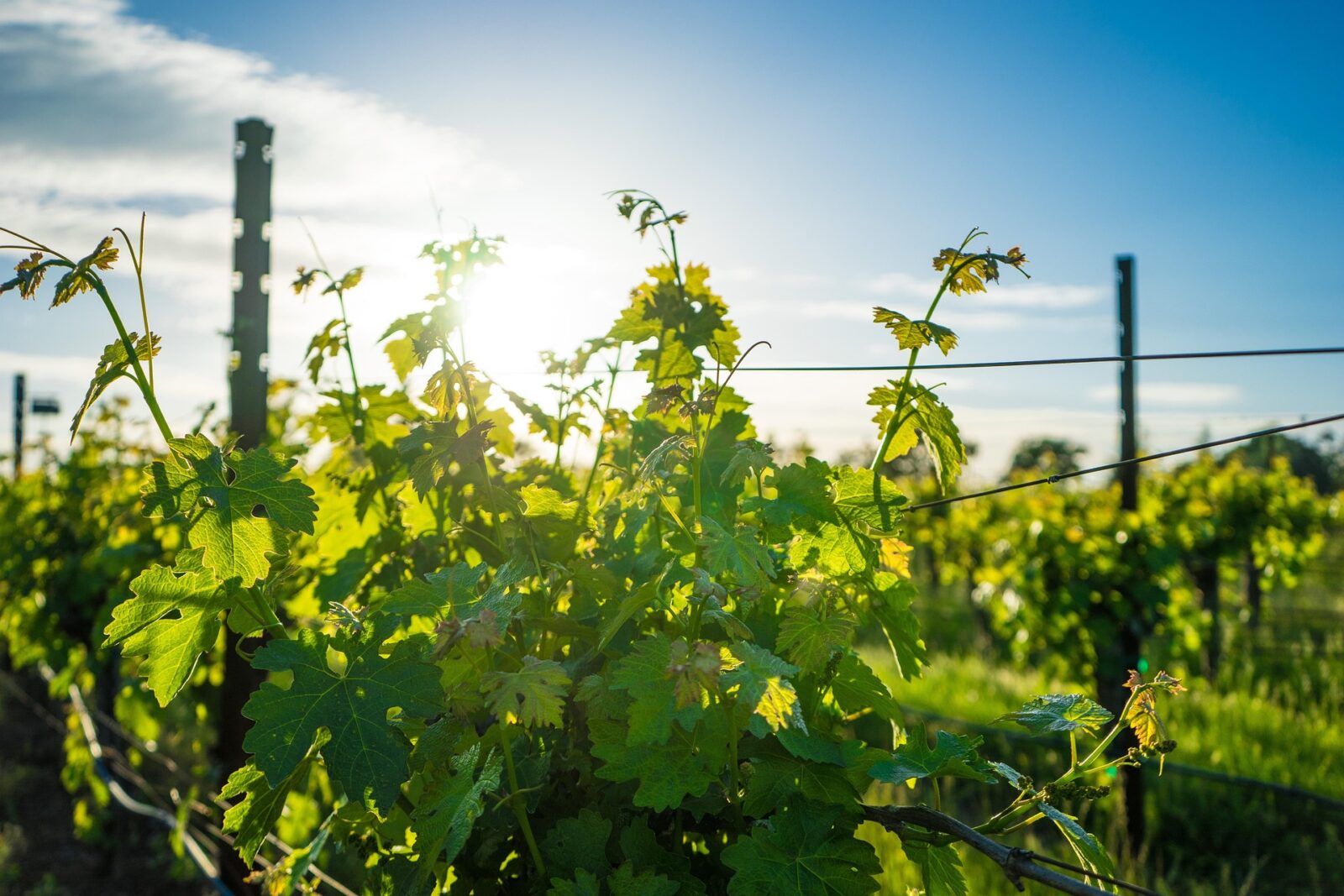
In the language of wine, there are terms that sound technical, but that hide fascinating realities. Microclimate is one of them – an often misused but essential concept for understanding the complexity of a wine.
Although it is commonly used to describe the conditions of a vineyard or region, the term has a much more precise meaning.
According to The Oxford Companion to Wine, what we commonly call a “microclimate” is actually mesoclimate (the conditions of a hill, valley, or vineyard).
The real microclimate operates on a much smaller scale:
- inside the calf’s crown
- between rows of vines
- even at the level of a single bunch
Here, minimal differences of:
- Light
- air circulation
- Humidity
- foliage density
can completely change the way grapes are ripened.
Macro vs. Mezo vs. Micro – the essential difference
To better understand:
- Macroclimate – the climate of a region (e.g. Bordeaux, Tuscany)
- Mesoclimate – conditions of a site or vineyard
- Microclimate – the precise conditions around each vine
Why does it matter so much?
Microclimates are decisive for the balance of the wine.
In a single row of vines, there can be major differences:
- a bunch at 19° Brix (less ripe )
- another at 27° Brix (overripe)
This variation influences:
- Acidity
- sugar
- Final structure
Winegrowers must make extremely precise decisions:
- When to harvest
- How to manage irrigation
- What grapes to select
Sometimes, even vine by vine.
A permanent game of balance
Factors that create different microclimates include:
- Exposure to wind
- shadow or direct light
- Soil type (clay vs. gravel)
- water retention
For example:
- an area exposed to the wind → colder, more acidic grapes
- a protected area → faster maturation, risk of overripeness
These contrasts must be harmoniously integrated into the final wine.
What it means for the consumer
Wines that take into account microclimates account for a small part of global production – about 5%.
Why? Because:
- Requires intense manual labor
- involves higher costs
- involve careful selection and differentiated harvesting
Instead, it offers:
- Complexity
- Depth
- ability to evolve over time
Indications that a wine reflects microclimates:
- Single Vineyard
- coming from mountainous or fragmented areas
- Styles with subtle and layered shades
Complexity vs. consistency
In industrial production, grapes are often:
- Harvest simultaneously
- Mix for uniformity
The result: correct but simpler wines.
In wines influenced by microclimates, each plot adds a different nuance – and the result is a more complex, more “lively” ensemble.
A small detail, a major difference
The microclimate is not visible on the label. It is not easy to explain in a few words. But it is present in every sip.
The next time you open a bottle, think about this: some wines are constructed from almost identical grapes. Others are the result of dozens of small climatic variations, precisely intertwined. The difference is subtle. But once you discover it, it becomes impossible to ignore.










Leave a comment