





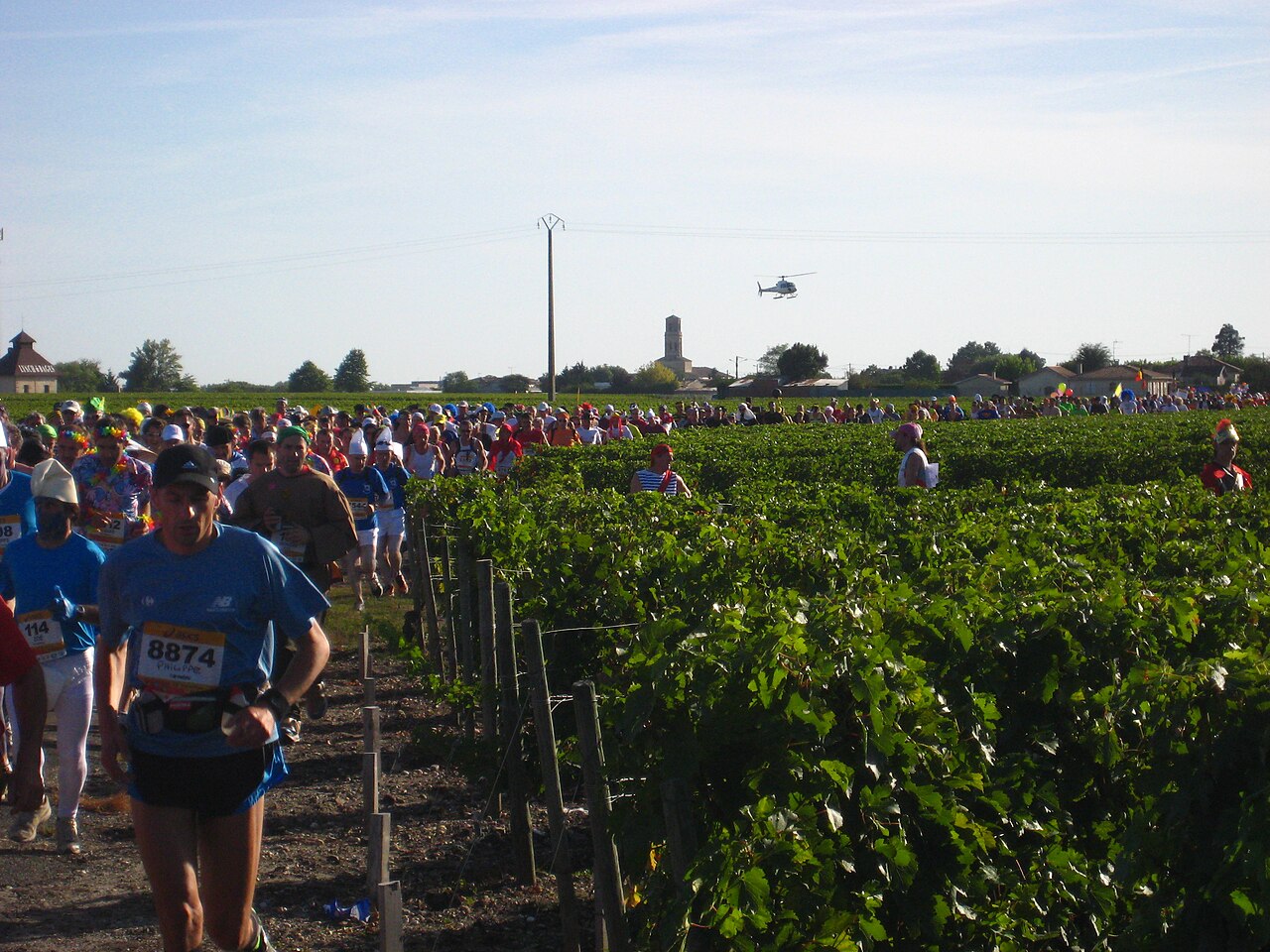
From the vineyards of the Médoc to urban clubs, a new form of lifestyle brings together movement, community and the pleasure of wine.
At first glance, wine and running seem to belong to different worlds. One speaks of slowness, contemplation, and ritual. The other — about rhythm, discipline and effort. And yet, somewhere between these two universes, a phenomenon has emerged that is gaining more and more ground: runs through the vineyards, where every kilometer can have a terroir flavor.
From a “crazy” idea to a global phenomenon
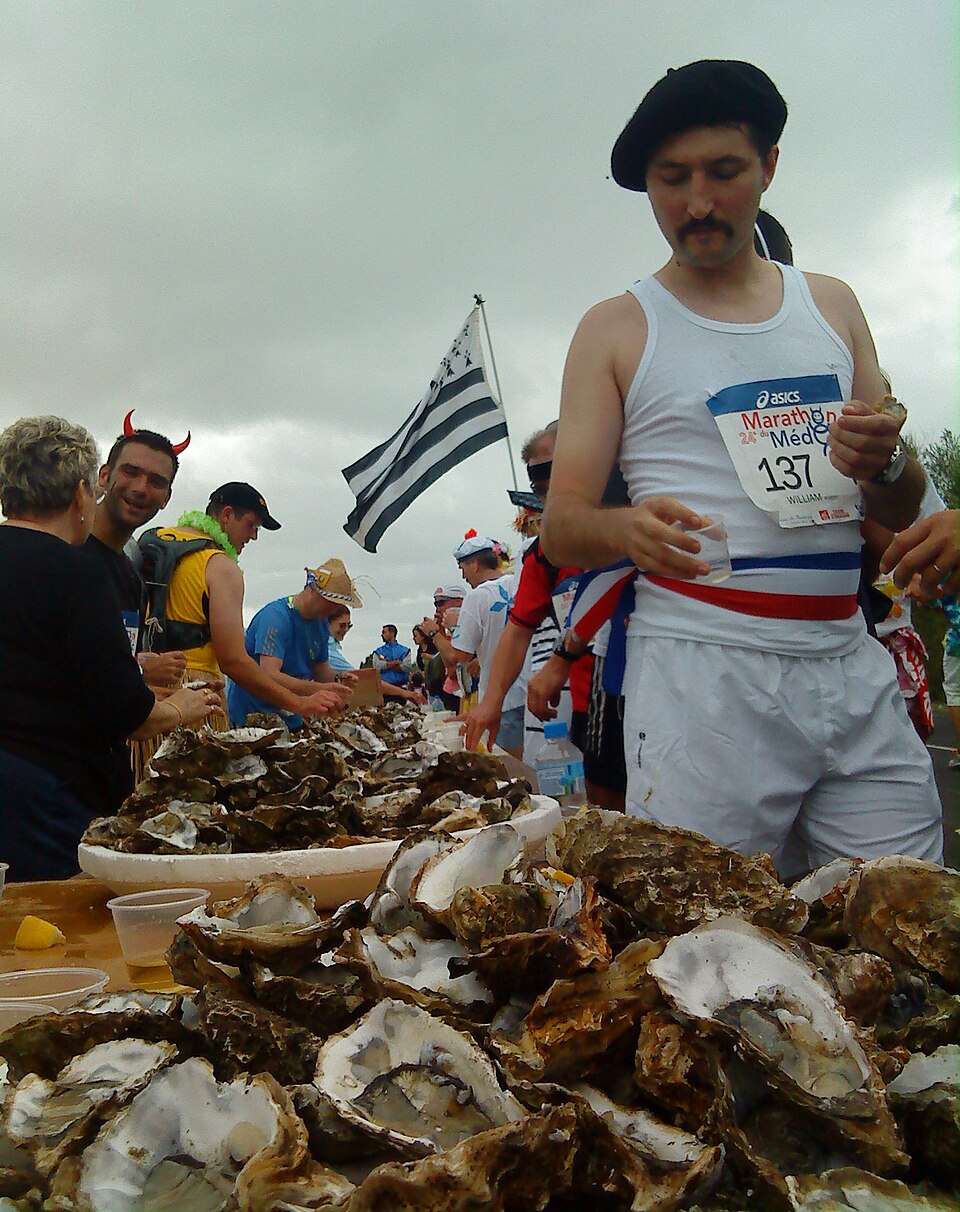
It all started in 1985, when six French friends launched the Marathon du Médoc — a race that defied convention. Participants not only ran, but stopped in vineyards for tastings of wine, foie gras or oysters, often dressed up as extravagant characters.
At first, reactions were skeptical. “The owners of château used to say: ‘We don’t need promotion for Médoc wines,'” recalls Hubert Rocher, one of the founders. Today, the perspective has changed radically. “The situation is very different now. The wines of the Médoc face real challenges.”
What seemed like an eccentricity became, over time, a landmark. By 1994, the event was already attracting 8,000 participants annually, and today it inspires similar initiatives around the world.
Vineyards become running trails
The phenomenon quickly spread beyond France. Wine regions in Europe and beyond have started to create their own “wine runs”, each with its own identity.
In Moldova, runners cross spectacular underground galleries. In Alsace or the Prosecco area, the trails wind through vine-covered hills. In Germany, Rheingau is preparing to compete with the famous Médoc with a new concept: Henkell 0.0% Vinothon, where participants will also taste non-alcoholic wines.
“People love wine, but they also want to be healthy. That’s why these events are so popular,” explains Tamino Simon, event organizer.
More than sport: a community
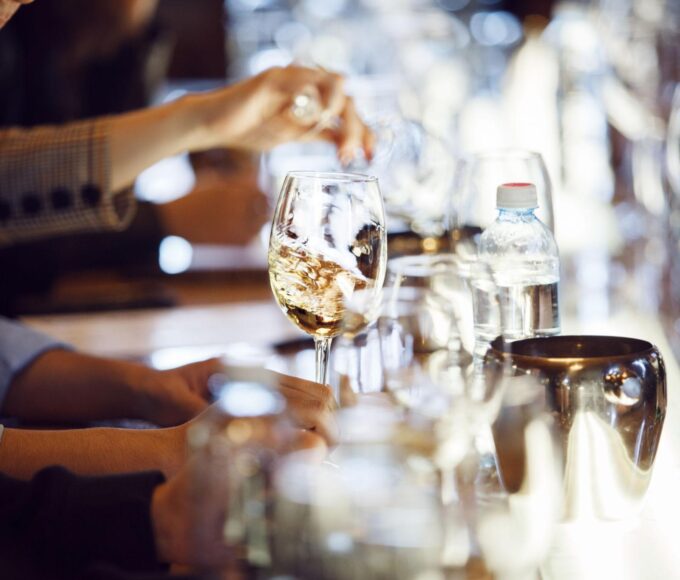
Beyond the big events, the phenomenon has also descended to the urban level. Clubs such as Run to Wine, founded in London by Katie Brook, organize relaxed runs that end with guided tastings.
“A lot of running clubs have become too strict and competitive,” Brook says. “People are looking for the social component — and wine helps with that. At the same time, I wanted to break the barrier of elitism around wine.”
This combination also has historical roots. Writer Colin Renton recalls that, in the past, French winegrowers kept their teams active by running through the vineyards, and wine was part of their daily diet.
Between balance and pleasure
Of course, the association between alcohol and physical exertion raises questions. But the key to this phenomenon is not excess, but balance.
“You don’t have to be dehydrated, and it’s important to consume electrolytes after running,” recommends Katie Brook. “At our events we always have water and food.”
Colin Renton, who ran for a year in different wine regions and documented his experience in the book The Wine Runner, offers a simple piece of advice: “Don’t overdo it. A glass at each stop is enough.”
Even one of the founders of the Marathon du Médoc, a doctor by profession, supports the idea of moderation: “We believe that wine is medicinal. It doesn’t cure, but it can help—as long as it’s not abused.”
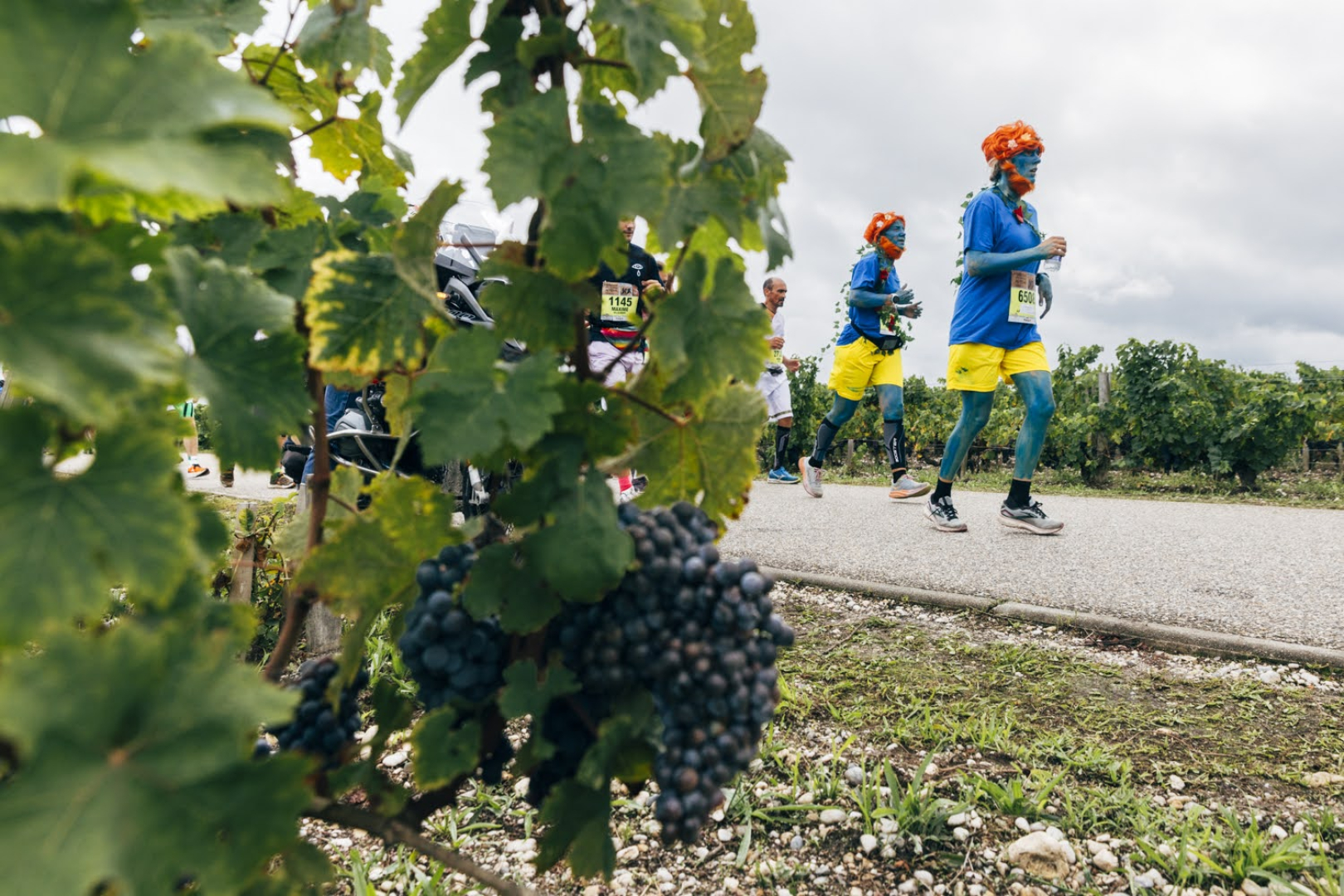
A new kind of refinement
Perhaps the most interesting aspect of this phenomenon is not necessarily the combination itself, but what it says about the change in contemporary lifestyle.
Wine is no longer just an object of formal tasting. It becomes part of experiences, movement, socialization. And running is no longer just about performance, it’s also about connection.
Between breath and aroma
In the end, wine and running are not as different as they seem. Both require presence. Both are built over time. Both are essentially about balance.
And when they meet, the result is not a contradiction—but a new form of joy. One that is lived between breath and aroma, between step and glass.





Leave a comment