





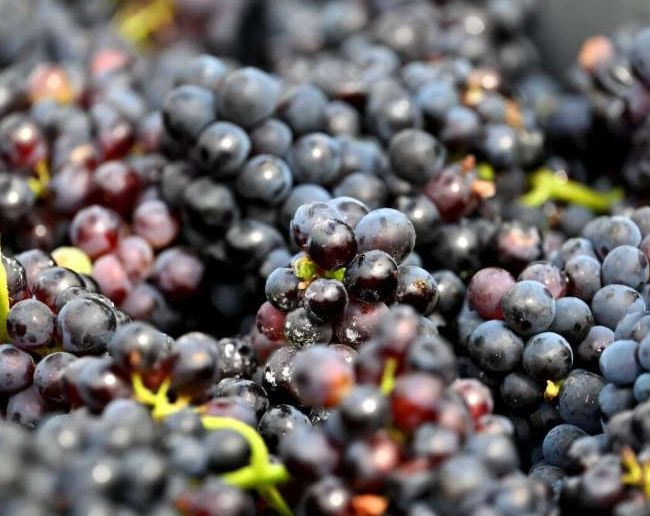
Discovered in an unexpected place, a small medieval relic links today’s wine to the people who lived 600 years ago.
Sometimes the greatest stories of wine are not found in cellars, but in unlikely places. In northern France, in a former medieval hospital, a 600-year-old grape seed was discovered where no one would have thought to look: in a latrine. And what seemed like a minor archaeological detail turned into a revelation — a direct link between the distant past and one of the most beloved varieties of the present: Pinot Noir.
A discreet discovery, a profound meaning
The seed was discovered in a 15th-century hospital in Valenciennes, at a time when such spaces often served as waste storage sites. Nothing unusual for the era — but extraordinary for science.
Genetic analysis has shown that this seed is identical to modern Pinot Noir varieties. In other words, what we drink in the glass today has a direct continuity with what was cultivated and, most likely, consumed six centuries ago.
Wine, as a living memory
This discovery doesn’t just tell a story about a grape variety, but about a deep relationship between humans and wine.
We don’t know if those grapes were consumed as such or turned into wine. But we know that they were present — in everyday life, in food, maybe even in rituals.
“They could be the same grapes that we would consume today,” suggests Ludovic Orlando, one of the researchers. An idea that, beyond scientific precision, has an almost poetic dimension.
Continuity, the key to great wines
The study published in Nature Communications confirms something that winegrowers have intuited for centuries: the continuity of varieties through vegetative propagation techniques — those cuttings that preserve the genetic identity of the vine.
This practice, used for over 600 years, explains why today’s Pinot Noir retains the same fundamental features as in the Middle Ages. It is, in a profound sense, the same wine — reinterpreted by each generation.
A history that goes even further
The research does not stop in the Middle Ages. Analysis of the seeds, some dating back to the Bronze Age, shows that domesticated vines appeared in southern France around 600 î.Hr., probably brought by Greek settlers.
Throughout the Roman period, grape varieties circulated between regions — from Spain to the Caucasus — creating an early network of European wine.
It is, in fact, the beginning of the globalization of wine, long before the term existed.
Wine between past and future
Today, France remains one of the pillars of the wine world, but it faces new challenges: climate change, unpredictable harvests, economic pressures. In this context, the discovery of a 600-year-old seed takes on a special significance. It’s not just a look into the past, but a reminder of resilience.
Wine is, perhaps, one of the few human creations that crosses time without losing its identity. Styles, techniques, preferences change — but the essence remains.
That seed, lost in an unexpected place, reminds us that every glass of Pinot Noir carries with it not only flavor and texture, but also a story that has lasted for centuries. And we just keep it going












Leave a comment