





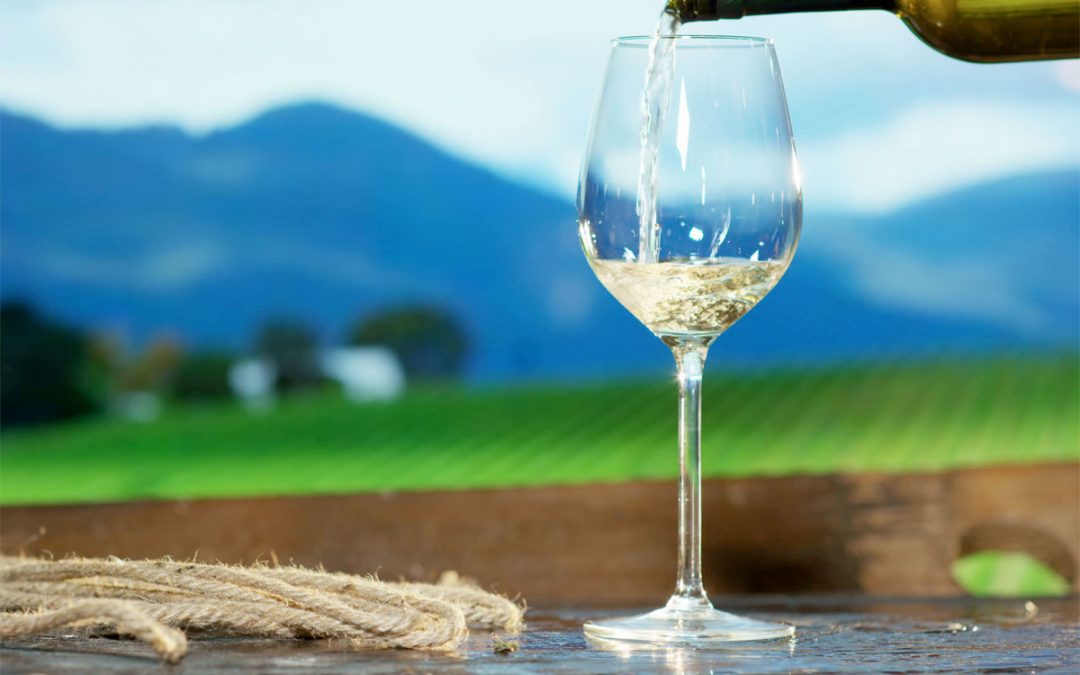
Beyond simple and acidic wines, a few producers are rewriting the destiny of a variety with ancient roots and a surprising future.
There are varieties that are born under the sign of glory and others that are slowly gaining their place in the consciousness of wine lovers. Trebbiano belongs to the second category. Long perceived as a “workhorse” of Italy — present in simple wines, balsamic vinegar or distillates — this discreet variety is now beginning to tell its true story. One about finesse, longevity and an authentic expression of the terroir of Abruzzo.
A vast past, a rediscovered identity
The first mentions of Trebbiano appear as early as Pliny the Elder’s Historia Naturalis, a detail that says a lot about its deep roots in Italian wine culture. And yet, despite this history, its identity has long remained diffuse—fragmented between multiple biotypes and regional interpretations.
Today, however, in Abruzzo, a new generation of producers is beginning to redefine this variety. Not through artifice, but by returning to the essence: low yields, respect for the vineyard and minimal intervention.
“While Trebbiano exists throughout Italy under many names, the Abruzzese biotype we work with is distinguished by its low yields,” explains Leonardo Pizzolo, owner of the Valle Reale winery. “Grown on well-exposed slopes, in the right years, it can yield some of the longest-lived and most intricately structured white wines in Italy.”
A wine of the place, not of the technique
At Valle Reale, the vineyards are located at the crossroads of three national parks, in a mountainous landscape where nature is not just the setting, but a partner. Here, Trebbiano acquires tension, precision and a rare mineral expression.
Pizzolo’s philosophy is simple and radical at the same time: “In the winery we intervene as little as possible. We are not trying to direct the fermentation, but to let it evolve naturally.”
This approach continues the tradition of Franciscan monks who cultivated vines here since the 15th century. Spontaneous fermentation, neutral containers — only stainless steel and glass — and a deep confidence in the wine’s ability to tell its own story. “The winery must remain neutral: to host the process, not to intervene in it,” says Pizzolo.
An Italian alternative to the world’s great wines
If Pizzolo’s style relies on purity and transparency, Marina Cvetić’s vision explores another dimension of this variety.
“We created these wines to offer an Italian white that is able to stand alongside the great wines of Burgundy,” she says of Marina Cvetić Trebbiano d’Abruzzo DOC Superiore and Riserva.
Its vineyards, located at the foot of the Majella massif, benefit from constant air circulation, which preserves the freshness of the grapes. In the cellar, maturing in French oak barrels adds depth and structure.
“Wood helps the wine reach its full potential, adding depth, personality and character while maintaining balance and finesse,” explains Cvetić.
The result is a different Trebbiano: fuller, more textured, but true to its identity.
Longevity, the true revelation
Perhaps the most surprising quality of Trebbiano d’Abruzzo is its ability to age—an aspect that is often overlooked. “It is undoubtedly one of the very few Italian white wines truly capable of aging,” says Pizzolo. “Those who consume it too early actually miss the most fascinating stage of its evolution.”
Experiences confirm this statement. Vertical tastings show a wine that not only stands the test of time, but evolves gracefully, developing complex tertiary flavors and an increasingly refined texture. “Older wines reveal aromatic layers, a remarkable texture and a perfect balance between acidity, depth and length,” says Cvetić.
A wine of the present — and of the future
Today, producers such as Valentini, Emidio Pepe, Tiberio or Amorotti contribute to this discreet but firm revival. Together, they outline a new status for Trebbiano d’Abruzzo: that of serious, deep and worthy of attention.
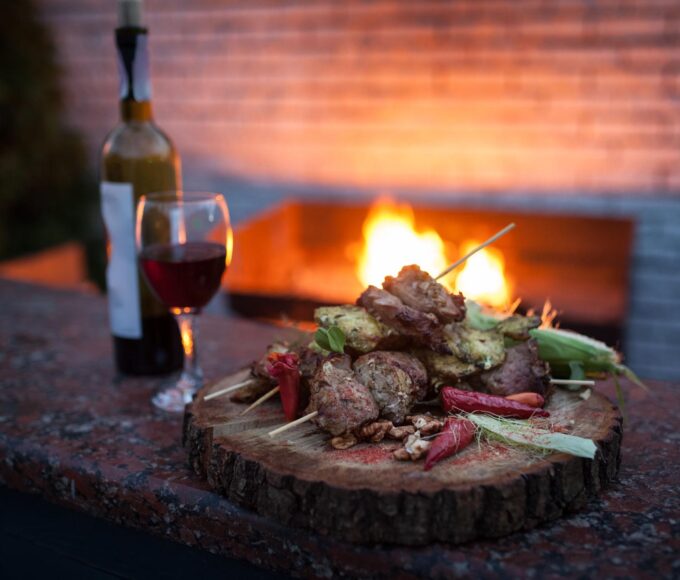
Served alongside fish or seafood on the old trabocchi — those fishing structures transformed into restaurants suspended above the water — or alongside more hearty white meat dishes, this wine proves its versatility.
A story that is just beginning
Trebbiano is no longer just a household name on modest labels. It gradually becomes a symbol of an Italy that is rediscovering its own resources, with patience and respect.
And for those willing to look beyond appearances, the reward is considerable: a wine that is not only drunk, but understood — over time, quietly, with every glass.









Leave a comment